21 May 2026
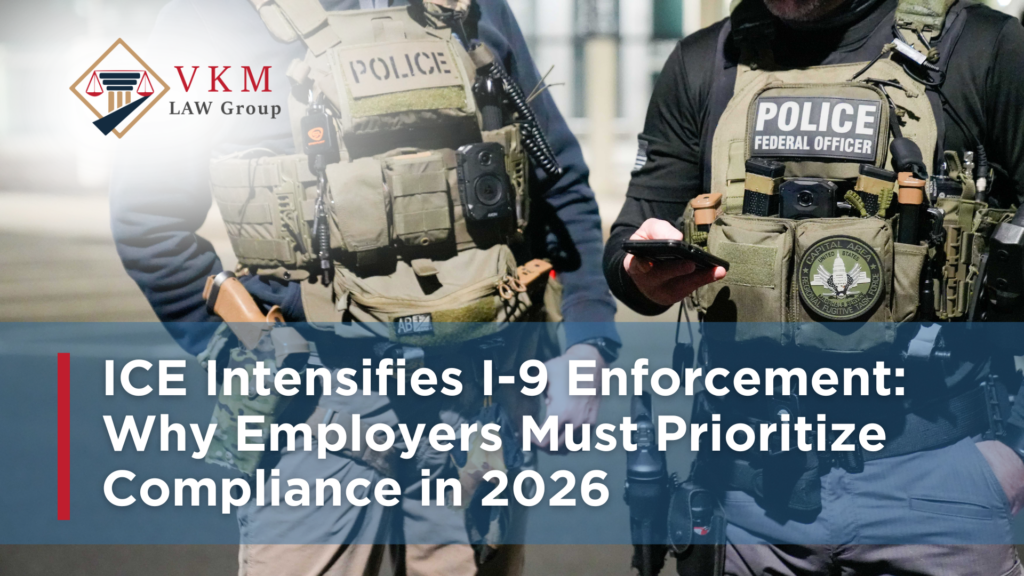
Employers across the United States are entering a new era of heightened immigration enforcement as Immigration and Customs Enforcement (ICE) increases scrutiny of Form I-9 compliance procedures. Recent enforcement developments suggest that even small paperwork errors may now trigger substantial penalties, government investigations, and operational disruptions.
For businesses that rely on international talent, remote onboarding, or decentralized hiring systems, the risks are growing rapidly. Employers can no longer afford to treat Form I-9 compliance as a routine administrative task.
At VKM Law Group, we help businesses navigate evolving immigration compliance requirements while minimizing legal and financial exposure during ICE audits and inspections.
Why Form I-9 Compliance Matters More Than Ever
Every U.S. employer is legally required to complete and retain Form I-9 for employees hired to work in the United States. The form verifies both employee identity and work authorization.
During an ICE inspection, government officers review whether employers properly:
- Completed Form I-9
- Verified employee documentation
- Retained records correctly
- Followed onboarding procedures
- Maintained compliance with federal regulations
In prior years, some clerical mistakes were often treated as technical violations that employers could later correct. However, revised ICE guidance issued in March 2026 signals a far stricter enforcement environment.
Today, even seemingly minor mistakes may result in substantial fines and increased scrutiny.
For employers managing large workforces or international hiring programs, working with an experienced Immigration Attorney in New Jersey has become increasingly important.
ICE Is Taking a More Aggressive Enforcement Position
According to updated ICE guidance, many errors that were previously categorized as “technical violations” may now be considered “substantive violations” during audits.
This distinction matters because substantive violations often carry significantly higher penalties.
ICE has indicated that employers may face fines ranging from hundreds to thousands of dollars per form depending on:
- The severity of the violation
- The number of affected forms
- The employer’s compliance history
- Evidence of good faith efforts
As enforcement intensifies, employers should expect ICE officers to closely examine every stage of the hiring and verification process.
Common I-9 Issues Receiving Greater Scrutiny
ICE is reportedly increasing enforcement attention on several common Form I-9 problems, including:
- Missing employee information
- Incomplete verification sections
- Improper remote verification procedures
- Missing employer signatures
- Incorrect document recording
- Errors involving employer representatives
- Failure to properly retain records
Businesses that rely heavily on remote onboarding or electronic verification systems may face additional exposure if procedures are not carefully managed.
For many employers, these compliance risks highlight the value of proactive legal oversight from a qualified Immigration Attorney.
Remote Verification and E-Verify Compliance Risks
Remote hiring practices expanded dramatically in recent years, but ICE is now signaling that employers using remote I-9 verification procedures must exercise greater caution.
According to recent guidance, employers may face penalties if they:
- Fail to properly indicate remote verification on Form I-9
- Use remote verification without qualifying E-Verify participation
- Do not comply with electronic recordkeeping standards
- Improperly complete remote identity verification steps
As remote work continues to grow across industries such as technology, healthcare, and professional services, employers should carefully evaluate whether their onboarding systems fully comply with current ICE requirements.
Industries Facing Increased I-9 Audit Exposure
While every employer is subject to Form I-9 requirements, some industries may face elevated audit risk due to workforce size, international hiring needs, or remote operations.
Technology Companies
Technology companies frequently recruit foreign professionals under H-1B and employment-based visa programs. These organizations often manage remote onboarding across multiple states and international locations.
Incomplete onboarding documentation or verification mistakes may create significant exposure during ICE audits.
Healthcare Organizations
Hospitals, clinics, and healthcare systems rely heavily on international medical professionals, including physicians, nurses, and specialists.
Healthcare employers must carefully balance staffing demands with strict immigration and employment verification requirements.
Manufacturing and Industrial Employers
Manufacturing companies employing large operational workforces may face increased audit attention, particularly if hiring processes occur across multiple facilities or through third-party staffing arrangements.
Employers in these industries should ensure consistent I-9 compliance procedures across all locations.
Why Internal I-9 Audits Are Critical
Many employers mistakenly believe that small clerical errors will not create major problems during government inspections. Current ICE guidance suggests otherwise.
Conducting proactive internal audits may help employers:
- Identify compliance gaps early
- Correct errors before inspection
- Improve onboarding procedures
- Reduce potential penalties
- Strengthen documentation practices
At VKM Law Group, we help businesses perform internal compliance reviews designed to reduce risk before receiving a Notice of Inspection from ICE.
Corporate Transactions and Historical I-9 Liability
Businesses involved in mergers, acquisitions, restructuring, or expansion should pay special attention to inherited I-9 records.
ICE investigations may extend beyond current employees and include historical employment records acquired through:
- Business mergers
- Corporate acquisitions
- Ownership transfers
- Organizational restructuring
Failure to review inherited I-9 documentation may expose companies to unexpected liability long after a transaction is completed.
An experienced US Attorney can help businesses evaluate potential risks during due diligence and post-acquisition integration.
Best Practices for Employers in 2026
As ICE enforcement continues to evolve, employers should consider implementing stronger compliance measures throughout the hiring process.
Strengthen HR Training
Human resources teams should receive updated training on:
- Current Form I-9 requirements
- Remote verification rules
- E-Verify procedures
- Proper document review standards
Conduct Regular Internal Reviews
Periodic internal audits may help identify and correct issues before ICE inspections occur.
Standardize Onboarding Procedures
Employers should ensure that onboarding policies are applied consistently across all offices, departments, and remote hiring locations.
Maintain Accurate Documentation
Careful record retention remains essential. Employers should securely maintain:
- Completed Forms I-9
- Supporting documentation
- E-Verify records
- Audit trails for electronic systems
Review Electronic I-9 Systems
Businesses using digital onboarding platforms should confirm that systems comply with current federal standards.
Why Legal Guidance Matters During ICE Audits
ICE inspections can quickly become complex and disruptive, particularly for employers with large workforces or immigration sponsorship programs.
An experienced Visa Attorney in USA can help employers:
- Prepare for ICE inspections
- Conduct internal compliance audits
- Respond to Notices of Inspection
- Correct procedural deficiencies
- Reduce enforcement exposure
- Develop long-term compliance strategies
Proactive legal planning often helps businesses avoid costly penalties and operational interruptions.
How VKM Law Group Supports Employer Compliance
At VKM Law Group, we assist employers with comprehensive immigration and employment compliance strategies tailored to today’s enforcement environment.
Our services include:
- Internal I-9 audits
- Employment verification compliance reviews
- ICE inspection preparation
- Immigration policy guidance
- H-1B and employment-based immigration support
- Corporate immigration compliance counseling
- Remote onboarding procedure review
We work closely with businesses across technology, healthcare, manufacturing, and other industries to help minimize immigration-related compliance risks.
Final Thoughts
The latest ICE guidance reflects a significant shift toward stricter Form I-9 enforcement and employer accountability.
Businesses should no longer assume that minor paperwork mistakes will be overlooked during audits. As ICE increases scrutiny of hiring and verification practices, proactive compliance efforts are becoming essential.
Employers that invest in internal reviews, HR training, and legal compliance strategies now may be better positioned to reduce audit exposure, avoid costly penalties, and maintain operational stability.
Partnering with a trusted Immigration Attorney in New Jersey can help businesses navigate today’s increasingly complex immigration enforcement landscape with greater confidence.